India's IT Hiring Just Turned a Corner — Here's What the July 2026 Numbers Actually Show
If you've been job hunting in Indian IT over the last year, you've probably heard some version of "the market's about to turn around" more times than you can count. Recruiters say it in calls. LinkedIn posts say it every other week. It's the kind of thing people say when they don't actually have new information — a vibe dressed up as a forecast.
This month, for the first time in a while, there's an actual number behind it.
The number that matters isn't the headline one
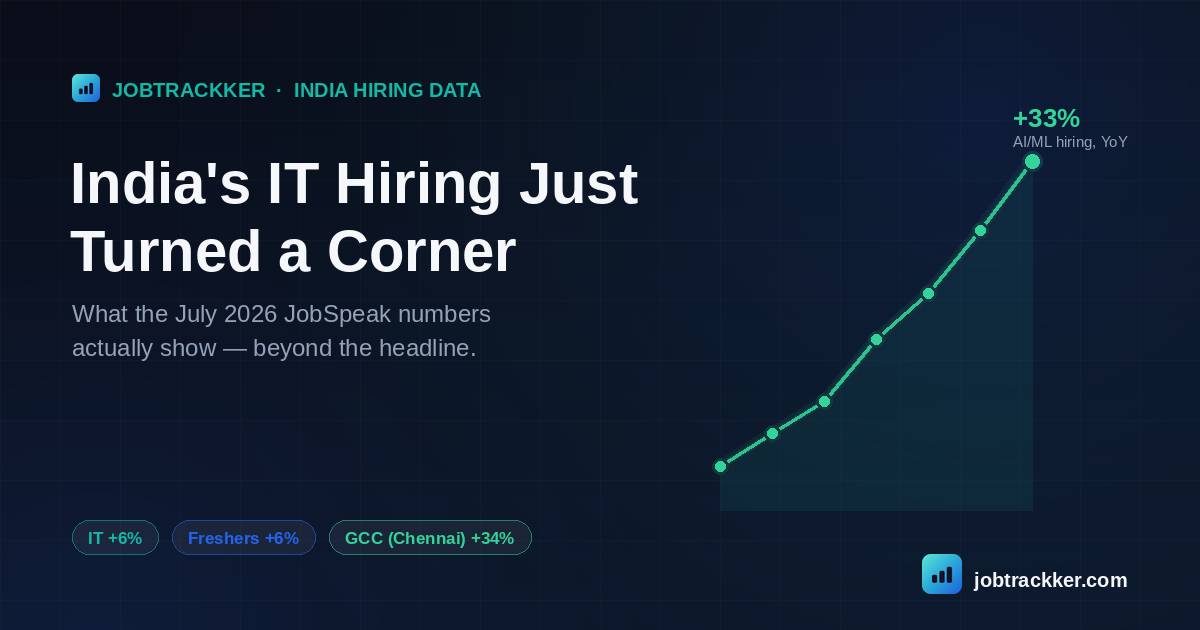
Info Edge published the Naukri JobSpeak Index for July 2026 on August 3, and most of the coverage led with the same top line: white-collar hiring up 5% year-on-year, AI/ML roles up 33%. Those are real numbers, but they're not actually the interesting part — a 5% YoY bump is roughly what the index has been posting most months this year.
The number worth paying attention to is buried a layer down: IT and software services hiring grew 6% YoY in July. A month earlier, in June, the same sector was still negative — down 3% YoY, alongside a rough June for banking (-12%) and a flat-to-down stretch that had defined most of the past year. IT went from contracting to growing in the space of one reporting cycle.
One month doesn't make a trend on its own, and I'll get to why you shouldn't over-read this in a second. But if you've specifically been waiting for IT to stop shrinking before you start applying seriously again, July is the first month in a while where that's not just something a recruiter told you to make you feel better.
AI is doing most of the pulling, but not evenly
Within IT, AI-related hiring grew roughly 30% YoY, with information-security roles up around 23% — those two categories are effectively carrying the sector's recovery. Across the whole economy (not just IT), AI/ML roles grew 33% YoY in July, extending a streak Naukri says has now held for over two years without a single down month.
Two details inside that number are worth sitting with if you're weighing whether "learn AI skills" is real advice or just noise:
- Demand for senior AI talent — the 13 to 16 year experience band specifically — jumped 67% YoY.
- Roles paying ₹50 lakh and above grew 64% YoY.
Read together, that's a market rewarding depth, not just resume keywords. Companies aren't just posting more "AI Engineer" roles at the same seniority mix as before — they're specifically hunting for experienced people and paying accordingly. If you're early-career and stacking a couple of AI/ML certifications onto an otherwise generic resume, this data doesn't really promise you much. If you're a senior engineer with several years of real ML or applied AI work, it's a genuinely good month to be looking.
Freshers: the growth is real, but it's not where you'd expect
Fresher hiring nationally grew 6% YoY in July — a smaller number than the AI headline, but a real one, and it's showing up in places that don't usually get the attention. Jaipur posted 27% growth in fresher hiring, Coimbatore 19%, and Kochi 16% — all ahead of the traditional tech hubs.
That's a different list from the cities leading overall hiring growth, which were Kolkata (17%), Hyderabad (16%), and Chennai (11%). Worth noticing: the cities doing best on fresher hiring and the cities doing best on hiring overall aren't the same cities. If you're a fresher specifically, following where "hiring is up" headlines point you (usually Bengaluru, Hyderabad, the usual suspects) may not actually be where your specific opportunity is strongest right now — Jaipur and Coimbatore have spent a few years quietly building out IT parks and GCC satellite offices, and July looks like the first month where that's translating into fresher offers rather than just real-estate announcements.
GCCs are having a genuinely lopsided month
Global Capability Centre hiring grew 5% nationally in July, which sounds unremarkable until you look at the city split: Chennai's GCC hiring was up 34% YoY, Hyderabad's up 22%. Most other GCC markets were essentially flat to account for that 5% national average. If you're specifically targeting a GCC role, the difference between applying in Chennai versus most other cities right now is not a small one.
What didn't grow
It's worth saying plainly: this was not a good month across the board, and most of the coverage skips this part. Education, hospitality and travel, pharma/biotech, banking and financial services, and telecom all declined year-on-year in July. Healthcare and IT grew 6% each; BPO/ITES and FMCG grew 5%. Outside of AI, IT, and a handful of steady non-IT sectors, July's recovery story doesn't really apply.
If you're in one of the declining sectors, "the job market is picking up" is true in aggregate and not particularly useful to you individually — which is exactly the kind of gap between headline and reality that makes these monthly reports worth reading past the first paragraph, not just skimming the summary someone else wrote.
The honest caveat
One month of positive IT data after roughly a year of weak-to-negative numbers is encouraging, not proof of a turnaround. The JobSpeak Index tracks recruiter activity and new job postings on Naukri — it's a demand signal, not a count of actual people hired, and month-to-month swings of a few percentage points happen regularly even in a stable market. June's IT number was still negative. July's flipped positive. Whether August confirms that or reverts is genuinely unknown right now, and anyone telling you with confidence which way it'll go is guessing same as you.
What I'd actually take from this: if you've been sitting on applications waiting for "the market" to justify trying, July is a reasonable signal to stop waiting — particularly if you're targeting AI/ML, IT security, or a GCC role in Chennai or Hyderabad specifically. If you're outside those categories, this month's data doesn't give you much of a green light either way, and that's worth knowing before you read too much optimism into a single headline stat.
Either way, the better use of a report like this isn't reading it once and feeling reassured — it's checking which companies in your target list are actually acting on it. That's part of why JobTrackker's Target Companies view exists: instead of re-reading JobSpeak every month, you can just watch whether the specific companies you care about are actually posting more roles, rather than trying to guess from a national index whether your particular search should feel different this week.